
What is Semantic SEO?
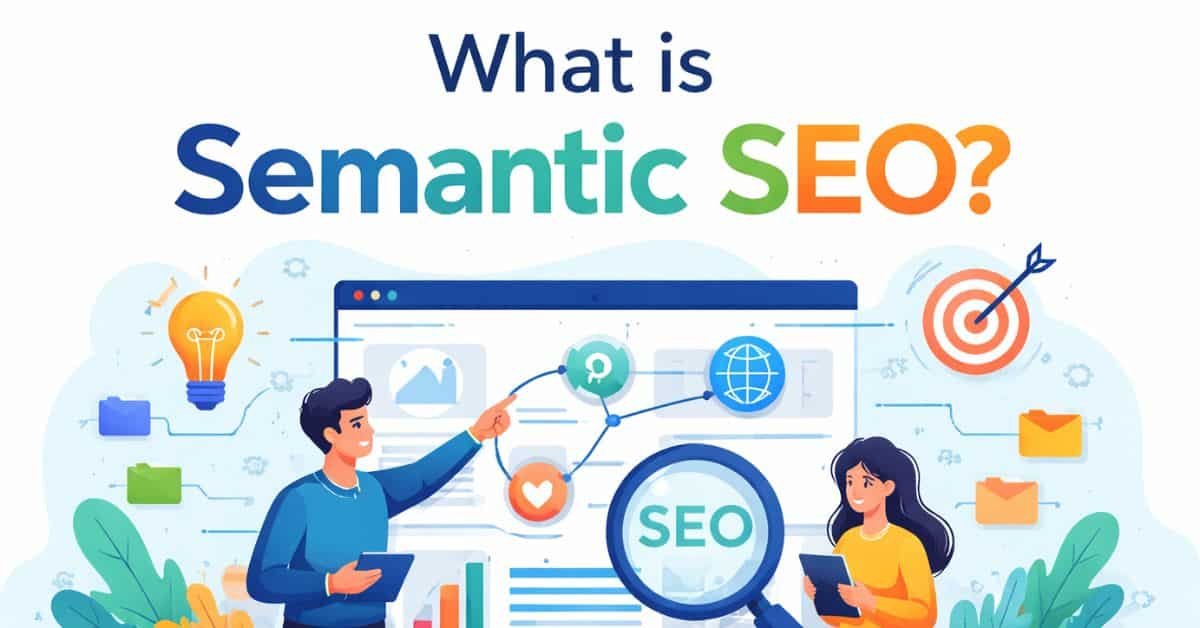
Semantic SEO is a way of writing content that focuses on meaning, not just keywords. Instead of repeating one keyword, you explain the full topic.
In the past, people ranked pages by stuffing keywords. Now, search engines understand what your content means. They look at context, related ideas, and user intent.
For example, if someone searches ‘how to grow tomatoes,’ Google does not just look for that exact phrase. It also looks for content that talks about soil, sunlight, watering, and care. That is semantic SEO in action.
What is Semantic SEO – Simple Definition
Semantic SEO means creating content that fully explains a topic so search engines and users both understand it easily.
Think of it like this:
If someone asks you about “cars,” you do not just say “cars” again and again. You talk about engines, fuel, types of cars, and safety. That is exactly how semantic SEO works.
How Search Engines Understand Content Today?
Search engines have become much smarter. They no longer depend only on keywords.
Before, Google matched exact words. Now, it understands the search intent.
Old way:
- Repeat the same keyword
- Create separate pages for each keyword
New way:
- Cover the full topic
- Rank for many related searches
What is Search Intent?
Search intent means what the user really wants.
There are four main types:
- Informational: user wants to learn something
- Navigational: user wants a specific site
- Commercial: user compares options
- Transactional: user wants to buy
For a better understanding of yours, read more about the search intent based on the types of keywords.
For example:
- What is semantic SEO? = informational intent
So your content must be clear and deliver the information the audience is looking for.
How Google Connects Ideas?
Google connects words using something called entities.
Entities are:
- people
- places
- things
- concepts
Example:
If your content mentions “Apple,” Google checks if you mean:
- the company, or
- the fruit
So, your content must give a clear context.
What is Semantic Search (And How It Connects to SEO)
Semantic search is how search engines understand meaning behind a query.
Semantic SEO is how you create content for that system.
Example:
Search: “best place to eat near me”
Google understands:
- location
- food intent
- nearby options
It does not just match words. It understands the full request.
So, when you write content, you must think about meaning, not just phrases.
Key Elements of Semantic SEO
Semantic SEO has a few important parts. Let’s keep them simple.
Topic-Based Content
Do not focus on one keyword. Focus on the full topic.
Example:
Instead of only “semantic SEO,” also cover:
- semantic search
- search intent
- entities
This builds strong content.
Search Intent Optimization
Always ask: what does the user want?
- If they want to learn, then teach clearly.
- If they want to buy, then guide them.
Related Keywords and Terms
Use natural variations.
Example:
- semantic SEO
- topic-based SEO
- search intent optimization
Do not force them. Use them naturally.
Content Depth
Explain the topic fully.
Answer common questions. Cover all important points.
Google prefers content that gives complete answers.
Internal Linking
Link related pages on your site.
Example:
If you have a post on keyword research, link it.
This builds topic authority.
Semantic SEO vs Traditional SEO
Here is a simple comparison:
Traditional SEO:
- focuses on keywords
- uses exact match phrases
- creates many similar pages
Semantic SEO:
- focuses on topics
- uses natural language
- ranks for many keywords with one page
How to Do Semantic SEO (Step by Step)
Follow these simple steps.
Step 1: Understand the Topic
Pick a main topic, not just a keyword.
Step 2: Find Related Keywords
Look for the right keywords. For example:
- questions
- related searches
- variations
Step 3: Identify Search Intent
Ask:
- is user learning?
- comparing?
- buying?
Step 4: Create Topic Clusters
Group related ideas together.
Step 5: Write Deep Content
Explain clearly. Use examples. Keep it simple.
Step 6: Use Internal Links
Connect your content with other related pages.
Benefits of Semantic SEO
Semantic SEO gives many benefits.
- helps you rank for more keywords
- improves user experience
- increases time on page
- builds authority
It also makes your content more useful.
Common Mistakes to Avoid
Avoid these mistakes.
- keyword stuffing
- ignoring user intent
- writing shallow content
- not using internal links
- writing only for search engines
Always write for humans first.
Is Semantic SEO Still Important?
Yes, this year it is more important than ever.
Search engines now use AI and advanced systems. They understand language better than before.
So, simple keyword tricks no longer work.
If you want to rank, you must focus on:
- meaning
- intent
- quality content
Frequently Asked Questions
Is semantic SEO the same as SEO?
No. Semantic SEO is a modern part of SEO. It focuses on meaning and topics, not just keywords.
Do keywords still matter?
Yes, but you should not overuse them. Use them naturally with related terms.
What are entities in SEO?
Entities are people, places, or things that help search engines understand context.
How is semantic SEO different from LSI?
LSI is about related keywords. Semantic SEO is broader. It focuses on meaning, intent, and full topics.
Can one page rank for multiple keywords?
Yes. With semantic SEO, one page can rank for many related searches.
Need Help with Semantic SEO Content?
If you want to rank higher but do not have time to create deep, topic-based content, we can help.
At SEOWriter101, we are a semantic SEO content writing agency that focuses on real results.
We create content that is:
- simple and easy to read
- focused on user intent
- built around full topics, not just keywords
- optimized to rank for multiple searches
We do not just write content. We create content that:
- explains clearly
- keeps readers engaged
- helps your website grow
Whether you need:
- blog posts
- website pages
- B2B content
- SaaS content
We are ready to help.
