
What Is Keyword Clustering & How to Create Keyword Cluster?
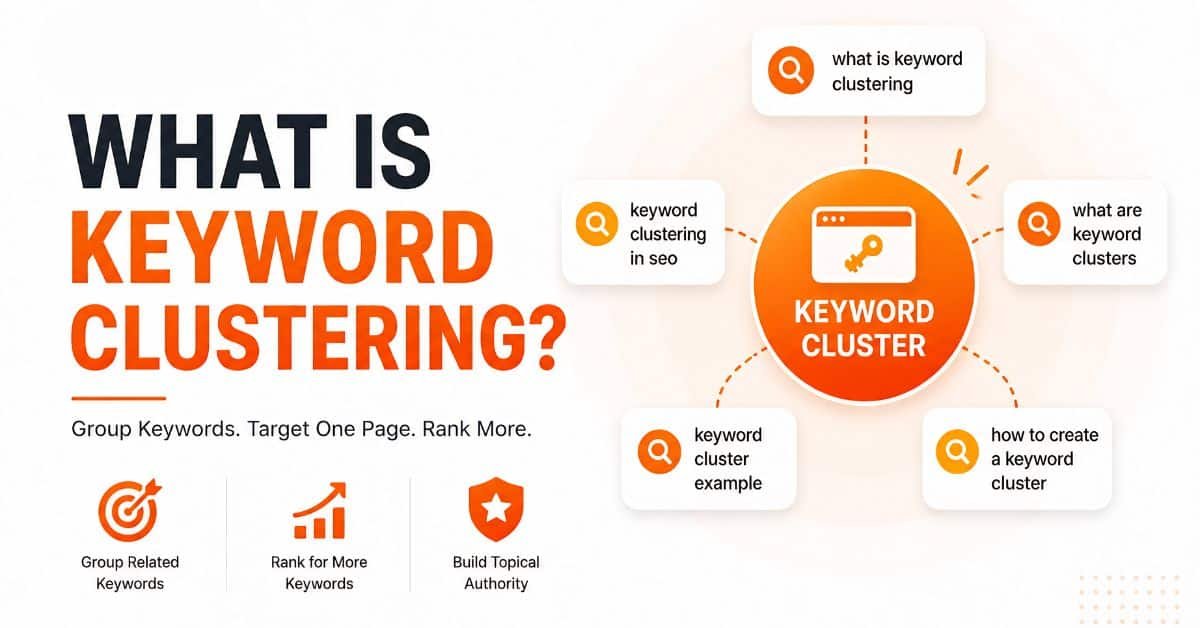
Keyword clustering in SEO means grouping similar keywords that share the same intent so you can target them with one page instead of many. This approach helps you rank for multiple terms, avoid duplicate content, and build stronger topical authority.
At SEOWriter101, we have used keyword clustering across dozens of client projects. We have seen a clear pattern. Pages built on clusters rank faster, stay stable longer, and bring in more qualified traffic.
What Are Keyword Clusters?
Keyword clusters are groups of related keywords that point to the same topic and intent. Instead of creating a page for each keyword, you combine them into one well-structured page.
For example, these keywords belong to one cluster:
- what is keyword clustering
- how to create a keyword cluster
- keyword clustering in seo
- keyword clusters
All of them ask for the same thing. The user wants an explanation.
From our experience, when you treat these as separate pages, none of them performs well. But when you combine them into one strong page, rankings improve quickly.
So, What Is Keyword Clustering in SEO?
Keyword clustering in SEO is the process of grouping keywords based on shared intent and similar search results. Then, you create one page that targets the entire group.
Today SEO in digital markeitng has changed alot. Search engines like Google now understand topics instead of just keywords. Because of this, writing separate pages for similar keywords no longer works.
At SEOWriter101, we shifted fully to clustering-based content models. After this shift, we noticed:
- Traffic growth became more consistent
- Fewer pages ranked higher
- Content updates became easier
Why Traditional Keyword Targeting No Longer Works?
Old SEO methods create real problems:
- Too many thin pages
- Internal competition
- Weak topical authority
We have audited many websites where 20 pages target similar keywords. None of them rank well.
How Keyword Clustering Solves SEO Problems?
Keyword clustering fixes this:
- You create fewer but stronger pages
- Cover topics deeply
- Send clear signals to search engines
We have seen pages jump from page 3 to page 1 after merging clustered content.
Role of Keyword Clustering in SEO
Keyword clustering aligns your content with how search engines work today. From one of our client work, these are the most consistent benefits:
- One page ranks for 20 to 50 keywords
- Higher chances of featured snippets
- Better performance in AI-generated answers
- Strong topical authority
- Lower bounce rates
| Feature | Benefit |
|---|---|
| One page per cluster | Avoids duplication |
| Deep coverage | Higher rankings |
| Clear structure | Better user experience |
| Internal linking support | Strong authority |
We track these metrics for clients, and clustered content almost always outperforms isolated keyword pages. Still, in SEO no promises can be made, becasue algorithms change overtime.
Types of Keyword Clusters
You can build clusters in different ways. However, not all methods give the same results.
Topic-Based Clusters
These focus on a broad subject.
Example:
- keyword clustering
- keyword grouping
- seo keyword clusters
We use topic clusters when building pillar pages.
Intent-Based Clusters
These depend on what the users search intent is.
- Informational: what is keyword clustering
- Commercial: best keyword clustering tools
- Transactional: buy seo tools
In our process, we never mix different intents in one cluster. This is a common mistake we fix during audits.
SERP-Based Clusters
This is the most accurate method. We always recommend this because it reflects real search behavior. If two keywords show similar results on Google, they belong in one cluster.
How Search Engines Understand Keyword Clusters?
Search engines now focus on meaning, not just words.
They analyze:
- Intent
- Context
- Relationships
From our testing, we found that pages that cover related terms naturally perform better than pages that repeat one keyword.
Role of Semantic SEO
Semantic SEO means covering a topic fully.
For example:
- keyword clustering
- search intent
- content structure
- seo strategy
We always include these related concepts when writing content. This helps search engines understand the page better.
How Google Groups Keywords Internally?
We test this regularly. When multiple keywords show the same top 10 results, Google treats them as one topic. So, we follow the same logic when clustering.
How to Create a Keyword Cluster?
Keyword clustering is not that difficult to do. Here is the exact process we use at our SEO content writing agency.
Step 1: Start with a Seed Keyword
Pick your main keyword. Example: what is keyword clustering
Step 2: Find Related Keywords
Use keyword research tools like:
- Ahrefs
- SEMrush
- Google Keyword Planner
We do not rely on one tool, nor we will recommend doing that. We combine data to get better coverage.
Step 3: Analyze Search Intent
This step is critical. We manually check:
- What type of content ranks
- What users expect
If intent does not match, we do not group the keyword.
Step 4: Check SERP Similarity
We open search results for each keyword. If at least 70 percent of results match, we group them together. This is a tested rule we use across projects.
Step 5: Group Keywords into Clusters
Now we create logical groups. We keep clusters simple. Overcomplicating clusters often leads to weak content.
Step 6: Assign One Page per Cluster
Each cluster gets one page. We strictly follow this rule to avoid cannibalization.
Keyword Clustering Example
Here is a simplified example of keyword clustering:
| Main Keyword | Supporting Keywords | Intent | Page Type |
|---|---|---|---|
| keyword clustering | what is keyword clustering, keyword clusters | Informational | Guide |
| keyword clustering tools | best tools for clustering | Commercial | Listicle |
Common Mistakes to Avoid in Keyword Clustering
We often fix these mistakes in client audits:
- Mixing different intents in one cluster
- Ignoring SERP data
- Creating too many pages for one topic
- Over-clustering keywords
- Not using optimal keyword density
- Not updating clusters over time
One mistake can break your entire content strategy. So keep your process clean and simple.
Keyword Clustering vs Keyword Mapping
These two steps work together. Keyword clustering groups keywords. Keyword mapping assigns them to pages.
| Keyword Clustering | Keyword Mapping |
|---|---|
| Groups keywords | Assigns keywords to pages |
| First step | Second step |
| Focus on intent | Focus on structure |
Conclusion
Keyword clustering is a core SEO strategy today. Do not treat it as an optional step, build every content strategy around it.
When you apply it correctly, you:
- Rank for more keywords
- Build stronger pages
- Improve user experience
Start simple. Group keywords by intent, validate with search results, and create content that fully answers the topic.
That is how modern SEO wins and sustains rankings.
Keyword Clusters – Frequently Asked Questions
What is keyword clustering in simple terms?
Keyword clustering means grouping keywords that ask the same question or solve the same problem. Then you create one strong page that answers all of them instead of writing separate pages for each keyword.
What are keyword clusters?
Keyword clusters are sets of keywords that share the same meaning and search intent. Even if the wording is different, the user expects the same type of answer, so they belong in one group.
How do you create keyword clusters?
First, collect related keywords using tools like Ahrefs or SEMrush. Then check their intent and search results. If the same pages rank for those keywords, group them into one cluster and target them with a single page.
Is keyword clustering important for SEO?
Yes. Keyword clustering is important because it helps you create deeper content, avoid keyword cannibalization, and rank for many related searches with one page. It also aligns your content with how search engines understand topics today.
What tools help in keyword clustering?
You can use tools like Ahrefs, SEMrush, and Google Keyword Planner to find keywords. For clustering, tools like Keyword Cupid help automate grouping based on search results.
